

A case study with Eastern Horticultural Services
Ground photos show what something looks like but aerial photos show what something means.
For businesses where the work happens at scale, across an entire property, a full estate, a multi-acre site, a ground photo captures a detail. An aerial captures the whole. Those are two different arguments to a prospective client.
Eastern Horticultural Services does premium landscaping, design-build, and historic estate restoration in the Brandywine Valley and Delaware. They’ve been at it since 2005. When we rebuilt their website this spring, the aerial photography was already in the portfolio. We’d been shooting EHS properties for over a year. The question wasn’t whether to use aerial. It was how to let it do the work it was built to do.
Who this matters for
If your business does work that changes a space, landscaping, construction, hardscaping, site development, estate management, your website probably has a ground photo problem.
Not because the photos are bad. Because they’re showing the wrong thing. Detail where context should be. Close-up where scale should be. Evidence where the argument should be.
Aerial photography fixes that. But only if the site is built to use it correctly.
What a ground photo can’t show
Take Gibraltar Estate in Wilmington.
Gibraltar was built in 1844. Its terraced gardens were designed between 1916 and 1923 by Marian Cruger Coffin, one of the first women to practice landscape architecture in the United States. The perimeter and retaining walls are original Brandywine granite. When EHS arrived, decades of invasive growth had buried the grounds completely. The marble promenade was under so much vegetation that no one knew it was there until the clearing was underway.
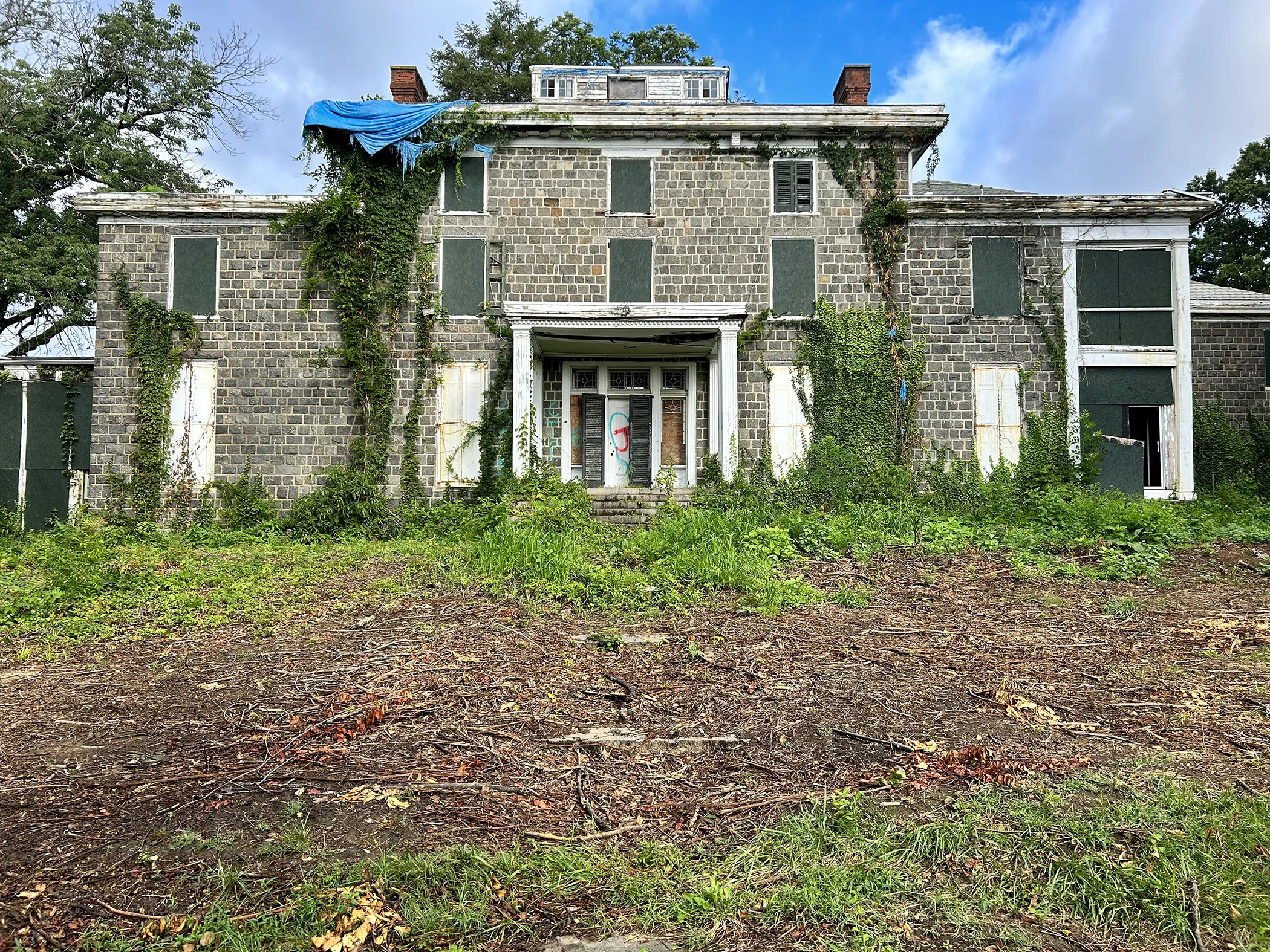
EHS restored all of it. The granite walls, the marble staircase, the promenade, the formal garden. All of it returned to how a property on the National Register of Historic Places should look.
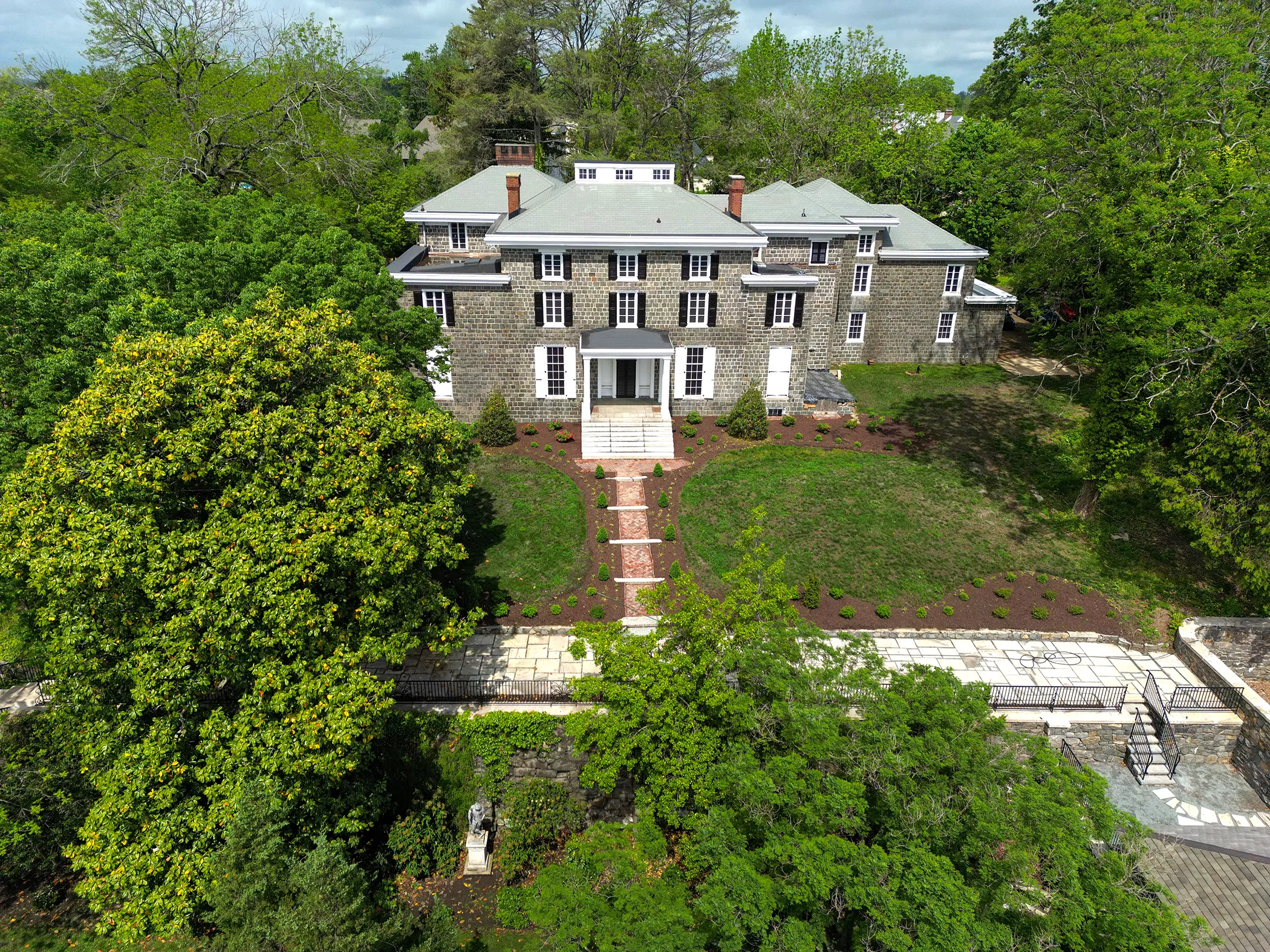
A ground photo shows a stone wall. A restored fountain. A staircase.
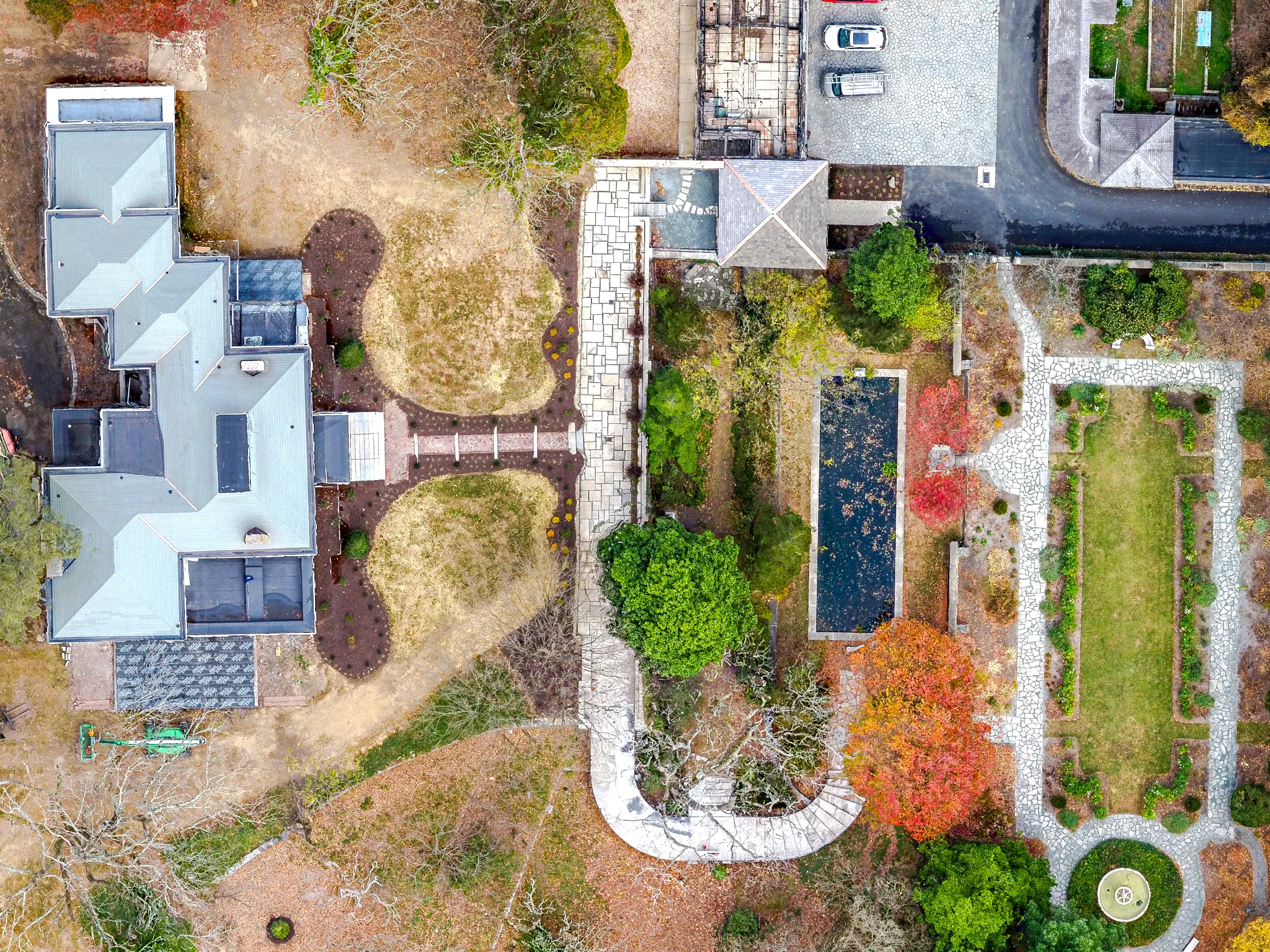
The aerial shows the full estate axis from above; marble promenade, reflecting pool, formal garden parterres, and outbuildings… all at once. That single image communicates the scale of the project and the skill required to execute it in a way no ground shot can match.
That’s the image that makes a property owner with a similar estate stop scrolling and start reading.
Scale only reads from above
The same principle holds for design-build work.
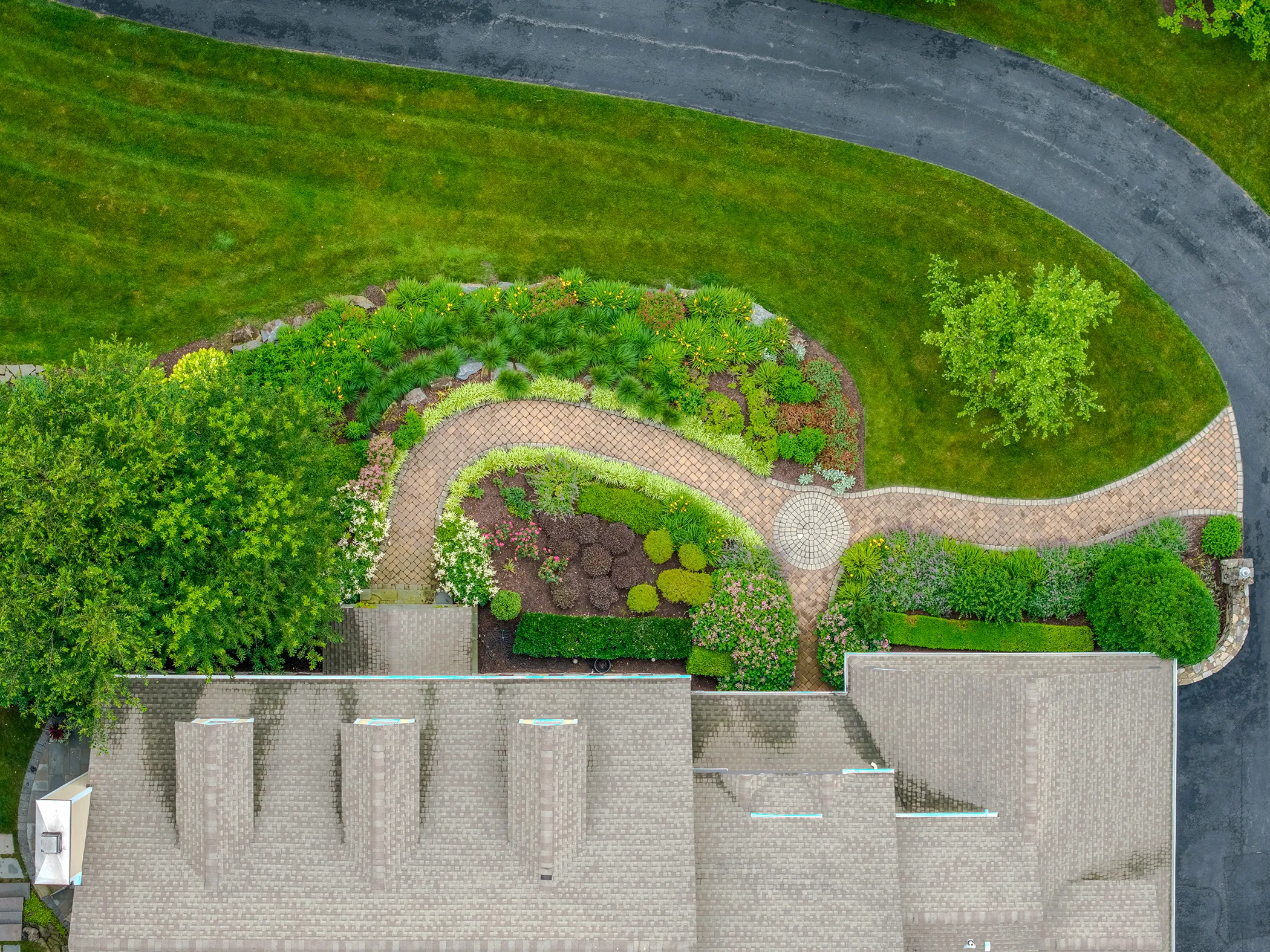
The Kennett Square residence project features a circular brick paver entry garden with curved planting beds and a bluestone patio with a fire pit. From the ground, you see the patio. You see the plantings. You see the craftsmanship up close.
From above, you see the layout. The geometry. How the design relates to the property as a whole. That context is what sells the next client who has a full acre to work with and wants to know if EHS can handle the scope.
Contractors, landscapers, and restoration firms consistently underestimate this. They photograph the finished details and wonder why the website doesn’t convert. The details are evidence. The aerial is the argument.
How it changed the EHS site
Every project page on the new easternhs.com leads with aerial. Not as decoration. As the primary proof of work.
The Our Work section features five projects across three service lines — historic restoration, design-build, and horticultural maintenance. In every case, the aerial establishes what the property is and what EHS did to it before the ground-level photography fills in the detail.
The result is a website that reads like a portfolio built by a company that understands their own work. Not a brochure with photos attached.
If you want to see what this looks like in practice, visit easternhs.com.
If you want to talk about what it could look like for your business, start here.

No responses yet